Infrastructure
Sovereign Infrastructure Architecture
Three pillars of technological sovereignty deployed across strategic Canadian sites. Energy, compute, and fabrication — integrated under a unified governance framework.
01 — The Three Pillars
Technological Sovereignty
SMR Energy Sovereignty
Small Modular Reactors
Sovereign energy production that eliminates dependence on external grids and fossil fuel markets. The SMR programme provides the foundational energy layer for all NQD operations.
- → 300 MW baseline capacity
- → GE-Hitachi BWRX-300 or equivalent
- → 24/7 carbon-free baseload
- → Indigenous co-ownership model
Tier IV Quantum Compute
GN Twin-Drive Architecture
The GN Twin-Drive System is a proprietary compute architecture designed for sovereign data processing. It combines quantum and classical compute in a dual-redundant configuration that ensures continuous operation.
- → Dual-redundant compute fabric
- → Quantum-classical hybrid processing
- → Cold-climate passive cooling
- → Sovereign data residency
Semiconductor Fabrication
Advanced Manufacturing
Domestic semiconductor fabrication eliminates Canada's dependence on foreign chip supply chains. The NQD fab facility leverages Canadian Shield mineral deposits and clean energy for sovereign manufacturing.
- → Sub-7nm process capability
- → Domestic chip production
- → Critical mineral supply chain
- → Export-controlled technology
02 — Compute Architecture
The GN Twin-Drive System

The GN Twin-Drive System is a proprietary dual-redundant compute architecture designed for sovereign data processing at scale. It combines quantum and classical compute in a configuration that ensures continuous operation even during maintenance or component failure.
The architecture leverages the Canadian Shield's cold climate for passive cooling, reducing energy consumption by 40%+ compared to conventional data centre designs. All data remains under sovereign jurisdiction — no foreign cloud dependencies.
03 — Deployment Sites
Strategic Locations
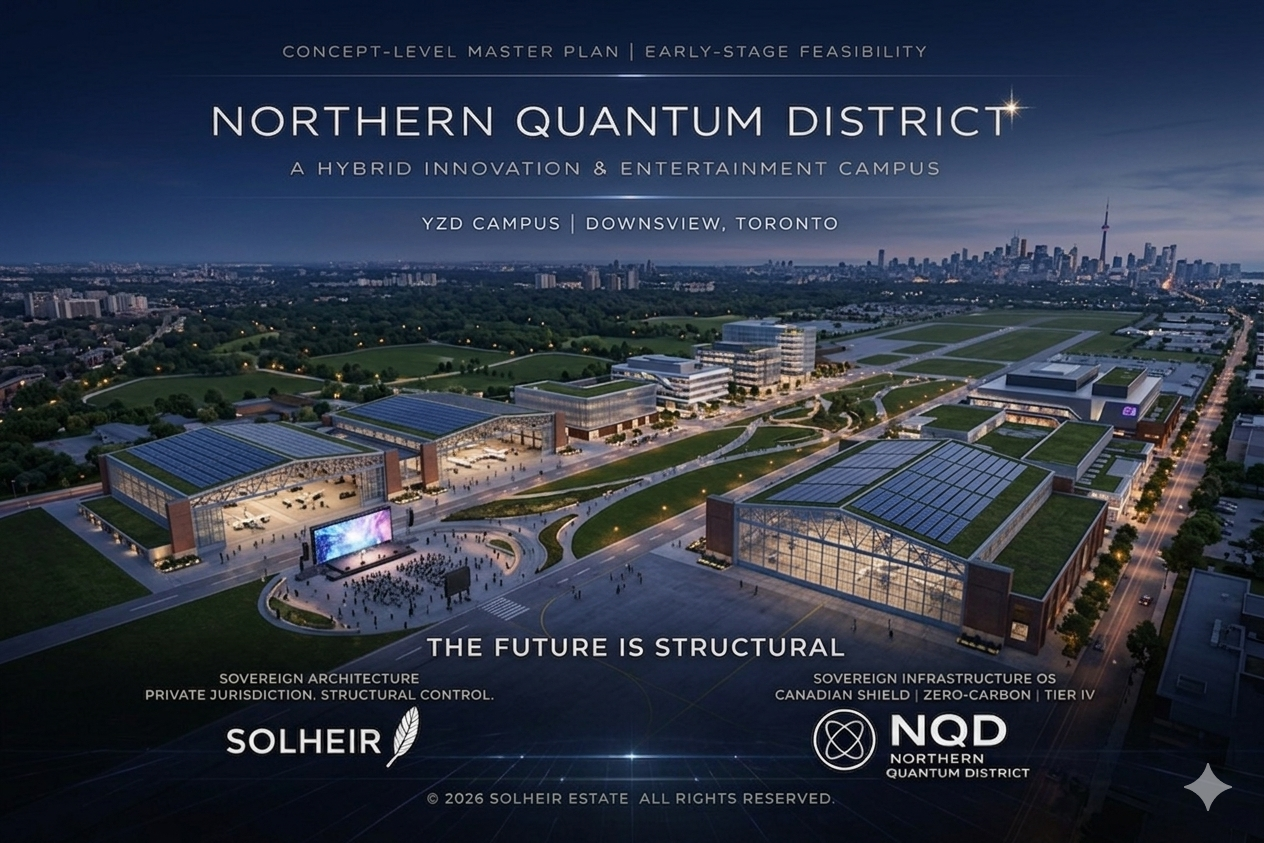
Primary NQD Deployment (Pre-Seed Planning Phase)
Northern Ontario — Canadian Shield
- → Geological stability: 2.5+ billion year Precambrian rock
- → Cold climate: 40%+ cooling cost savings for data centres
- → Proximity to critical mineral deposits (lithium, cobalt, rare earths)
- → Abundant hydroelectric and nuclear energy potential
- → Strategic distance from population centres (security advantage)

Urban Innovation Hub (Phase 2 Target)
Downsview — Micro-NQD
- → Former Bombardier aerospace facility repurposed
- → Proximity to Toronto's tech ecosystem and talent pool
- → Mixed-use development: research labs, incubators, housing
- → Transit-connected (TTC, GO Transit)
- → Demonstration site for NQD governance model
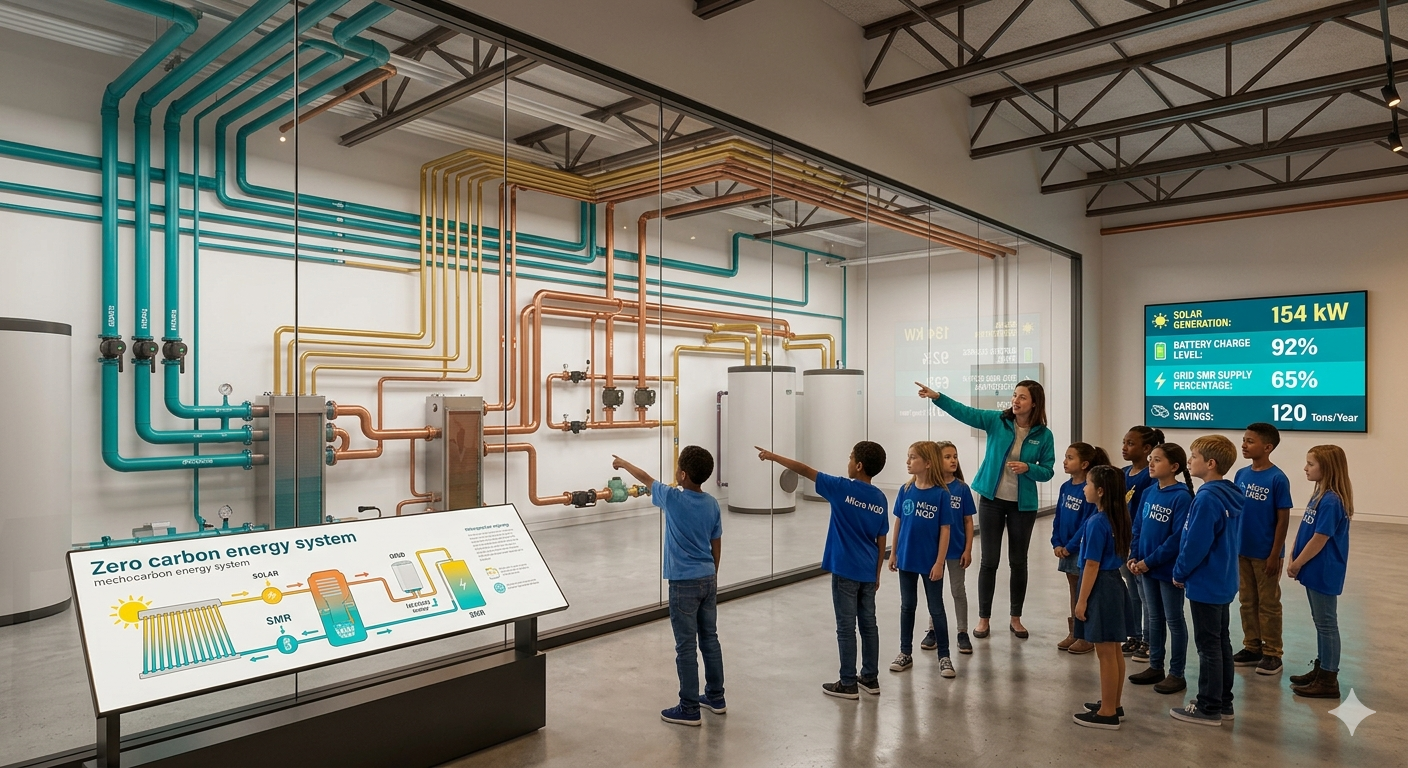
Design-Build-Finance-Operate-Maintain (Phase 3 Target)
Harbourfront Centre — DBFOM
- → Cultural and institutional anchor on Toronto waterfront
- → Public-facing demonstration of AGD governance principles
- → Mixed-use: exhibition, research, public engagement
- → Revenue-generating cultural infrastructure
- → Partnership model for institutional deployment
04 — Extended Programmes
SNLI — Space, Nutrition, Logistics Initiative
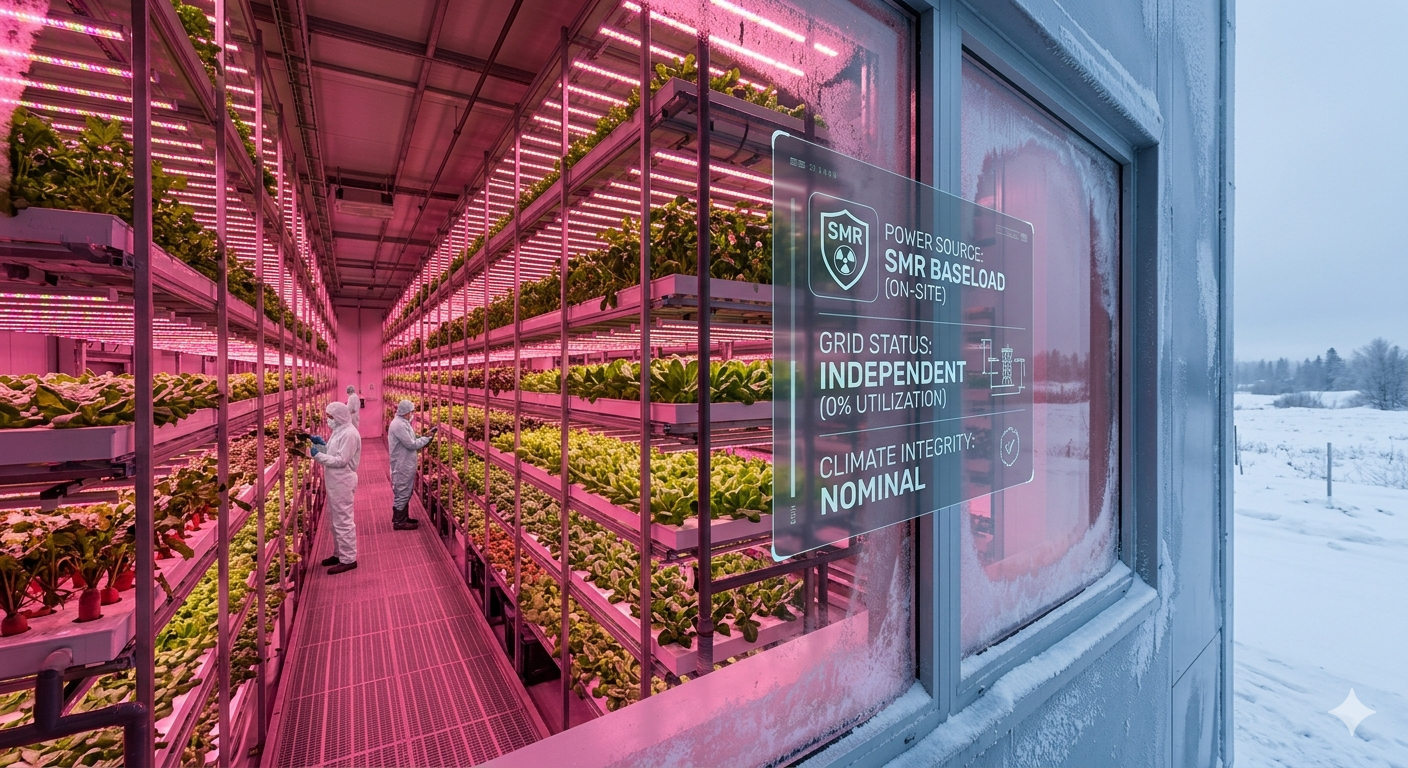
The SNLI extends the NQD framework into three additional domains: sovereign space infrastructure (launch capability, satellite networks, orbital compute), food security and nutrition sovereignty (vertical farming, supply chain independence), and logistics infrastructure (autonomous transport, sovereign supply chains).
The Sovereign Space Defence Architecture positions Canada as a participant in the emerging space economy — not as a consumer of foreign launch services, but as a sovereign operator with independent orbital capability.